An AI-native research product that cuts synthesis time for analysts by 80%
How I led the end-to-end design for one of the earliest Gen AI products that helped reposition BlueDot from a data provider to decision partner
Built in 2023
Working PoC in 4 months
Shipped within 6 months
The video shows the core workflow of querying for information and taking action on it.
Sparknotes
Timeline
Core development Mar-Sep 2023
Team Composition
PM・4 Eng・SME・Design Lead
My Role
Co-defined strategy and vision
Led exploration, prototyping, and usability and product testing
Led design, incl. optimizing the design system and interaction patterns for generative AI
Impact
Reduced the time-to-task for research from 15 hours to less than 3 hours a week
Also built a use case for AI among multiple clients and gave BlueDot vital insights to build AI workflows and enrich datasets using AI
Methodologies Implemented
Information architecture optimized for Gen AI
Nomenclature and language for probabilistic systems
Transparency & trust
Interaction and motion design
Task flow and error recovery
Emotion management design
Usability optimizations
Context & Problem
Analysts burnt up to 15 hours a week reading and manually synthesizing data
There were too many sources to go through, which became a bottleneck
Who are the analysts?
Public health analysts
Pharma researchers and sales
Enterprise risk managers
Where did the research time go?
Scanning news articles, alerts, and case trends.
Manually synthesizing that information.
What did analysts produce?
Recommendations for decision-makers in their organizations
This usually took the form of regular reports and bulletins.
Strategic Bet
AI will transform research from a burdensome task into an engaging part of building recommendations
I partnered with the product director to built a case for LLMs with the CPO, with the pitch of elevating BlueDot from a data provider to a partner in decision-making
Why use generative AI?
Changing landscape, caused by a post-COVID budget squeeze
Clients had less budget to spend on purchasing data and intelligence products, invest in in-house analysts, and expand processes to get more insights.
Rising demand for curated insights
Raw data didn't cut it anymore: given the pressure to optimize processes, there was increasing demand for curated insights. Sales of custom reports had gone up significantly year-over-year.
Capitalize on the first-mover window
Assistant was built in 2023, when LLMs were a new technology, so even if we failed fast, it was a solid strategy to get ahead of the curve. Also, the competitive landscape was over-invested in their own proprietary technologies while BlueDot was primarily a provider of structured data and could move quickly to adopt AI.
Exploration & Core Insight
The risk of one wrong answer outweighed the upside of speed
I conducted discovery, secondary research, and concept testing, in partnership with an internal SME and an AI engineer, to assess the impact of using AI at the heart of the product. I prioritized understanding how common workflows could evolve and the risks specific to our high-stakes and regulated domain. What I learnt was that balancing speed with trust was critical.
Architectural Decision
Use AI to understand intent only
The LLM would map user queries to specific BlueDot datasets rather than generating its own answers.
How I drew this conclusion?
Primary research
Analysts most cared about research outcomes and accountability. We responded to this with digestible artifacts and the ability to manually validate outputs.
Secondary research
At the time, LLMs performed best at parsing user intent. But there wasn’t enough specialized training data yet to accurately respond to high-stakes questions.
I mapped the user journey and influenced the architecture
User prompts in natural language
Map user intent to dataset(s)
Clarify till LLM has what it needs
AI Workflow
Extract data and pick the output format
Programmed Workflow
Design Decisions
Feasibility
Core mechanics of the product
Usability
Intent management & new chat pattern
Interaction
Flow, prompt engineering & reliability
Emotion
Lexicon & response tone
Workflow
Output artifacts & value
Initial prototyping
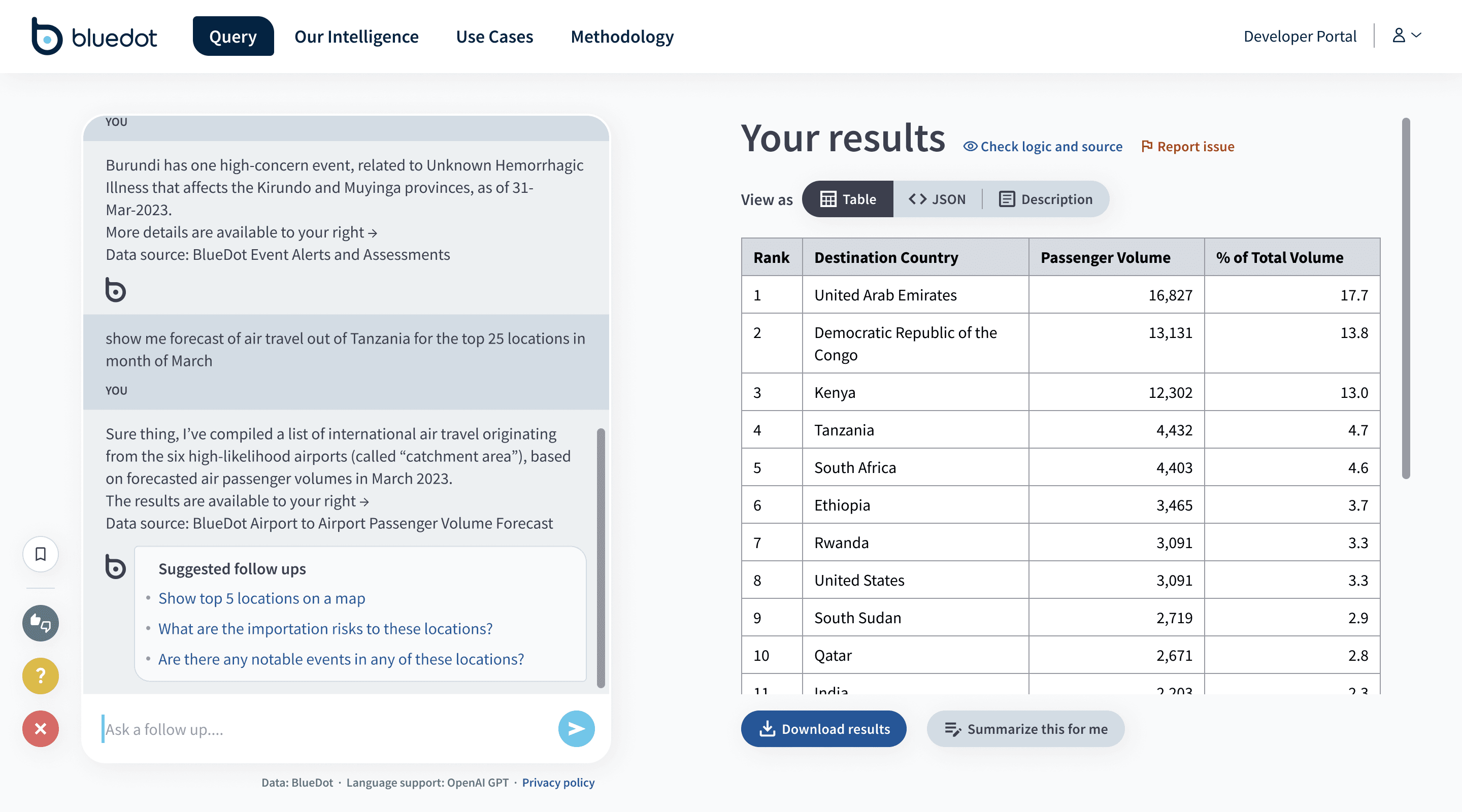
I structured the layout so outputs were the centre of gravity on the screen
Using learnings from my contextual inquiry, I placed the chat and output in dedicated zones to mirror how analysts compared multiple artifacts when building their understanding of an event.
Early client testing
Users immediately pushed past basic questions, so we adapted our development approach
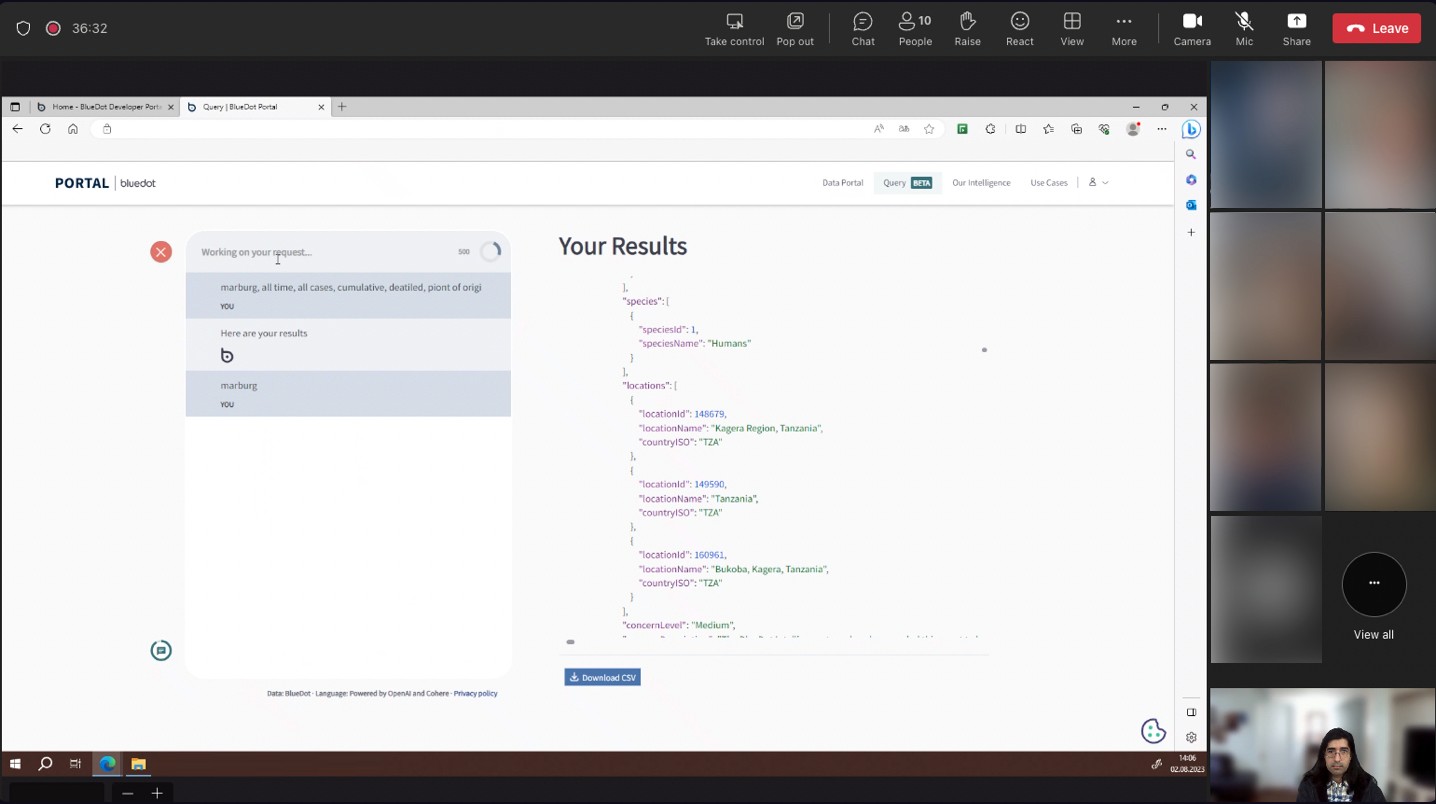
We built a scrappy version of the product in 3 weeks to test how clients engage with LLMs. Testers asked complex questions that combined datasets and referenced earlier questions in chat, something our RAG-based service was not built to handle.
Working within 2023 limits
The early testing let us assess what trade-offs to take: I worked with engineering to map technical feasibility to the experiences worth preserving.
Feasibility Decision 1
One question = One LLM session
Priority:
Giving each question a reliable context window
Context windows were low enough that the instructions to make the interaction reliable took over half the available memory. We couldn't guarantee a consistent number of user conversation within a session. So I co-developed a pattern with the tech lead that let users seamlessly switch from one LLM session to the next (with a new context window each time), while the UI stacked questions in the frontend as if it was all a single chat session.
Trade-off:
Each question was a silo
While it hindered exploration, as users could not compare data or build on questions, the cost and latency also needed to be considered. So I proposed we solve this problem in a future release, assuming the foundational models would improve over time.
Feasibility Decision 2
Ask more clarifications to maintain trust
Priority:
Ensuring the LLM reliably understands intent
Early testing made it clear that clarifications were annoying, but wrong answers, mostly caused by misunderstanding the user's intent were called out by testers for being frustrating.
Trade-off:
Added friction and annoyance
I partnered with the tech lead to influence stakeholders to take a more careful approach when answering queries. More clarifications were a cost worth paying to keep the brand trust high.
Launch & Adoption
We released a controlled MVP in 4 months and launched in 6 months
We provided early access to 5 marquee clients, their response was overwhelmingly positive.
Given the newness of the technology among career analysts, we needed targeted onboarding and training. I worked with CS to build sample queries users can ask.
Further design and model refinements continued for another 6 months, through February 2024.
Launch Decision
MVP = Minimum Valuable Product
We didn't release Assistant till we were satisfied with the output quality.
This was a joint decision between the PM, tech lead, epidemiologist and me.
Media coverage
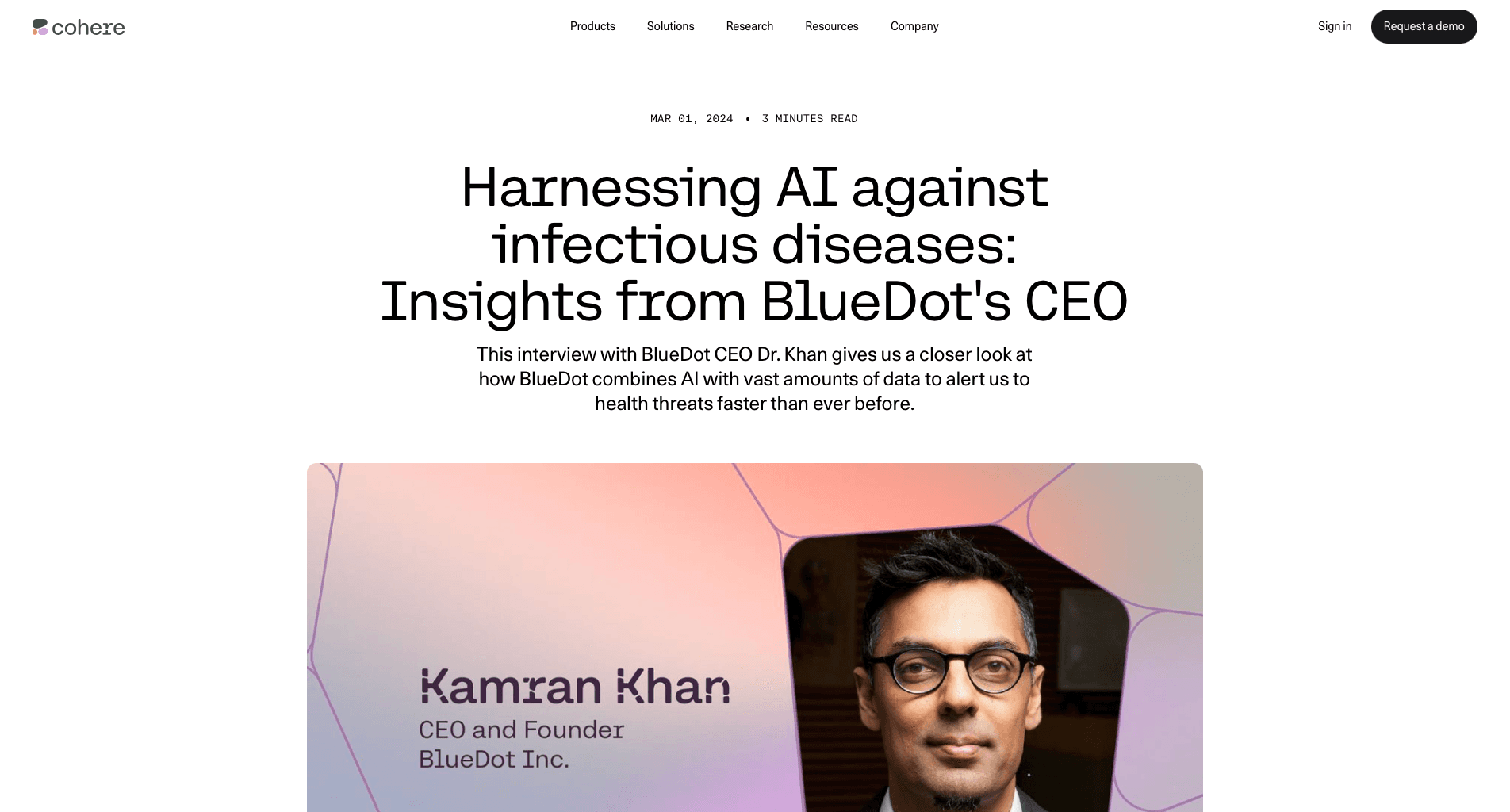
Highlighting the use case of this technology
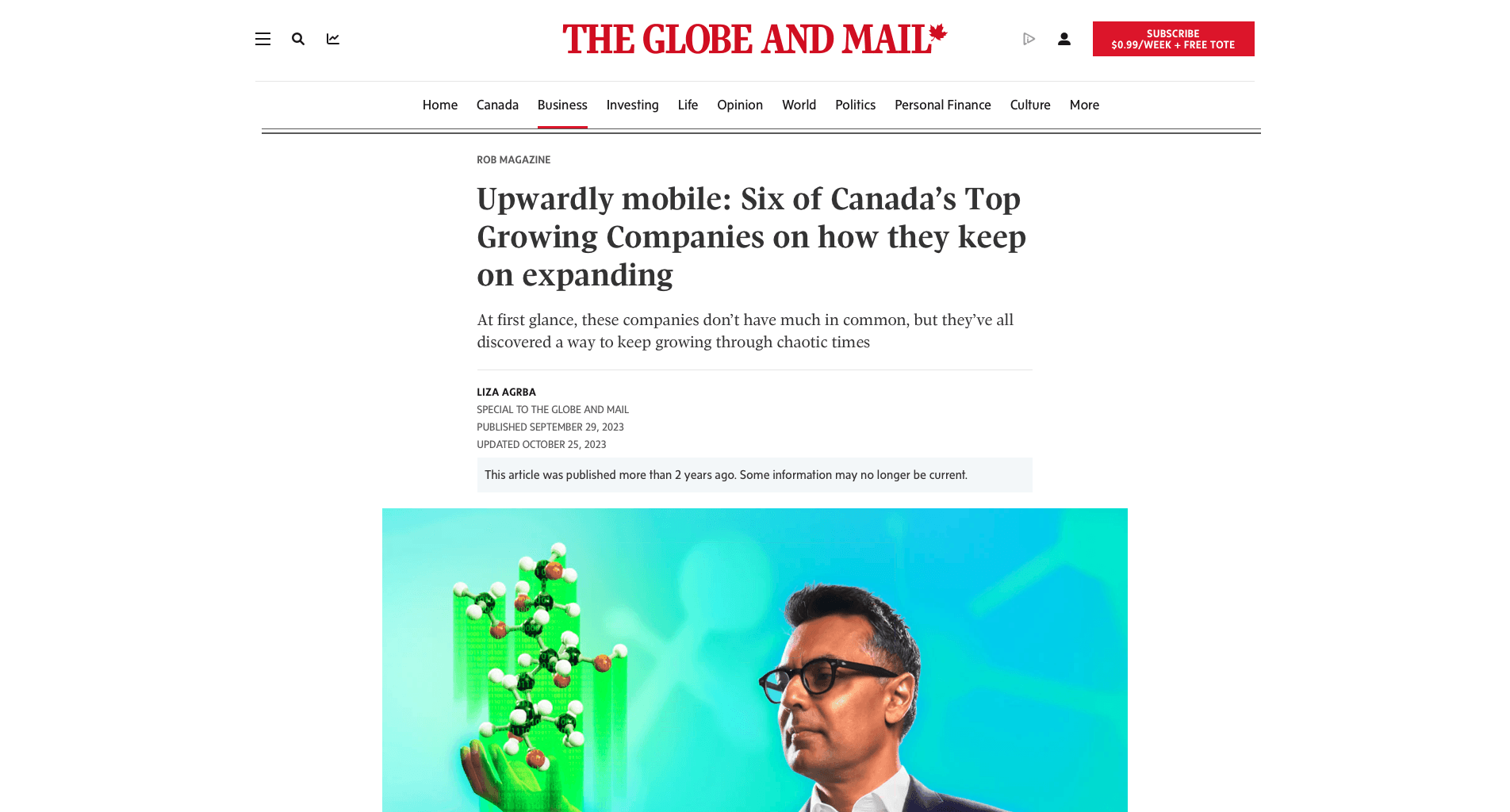
Recognition of BlueDot's recent market growth
Project Impact
Efficiency & reliability
80%
Reduced time-to-task
Down from 15 hours a week, for analysis and manual synthesis.
97%
Intent recognition accuracy
>90% at launch and 97% after post-launch refinement.
> 1 min
Time-to-first-artifact
Compared to 30 to 45 minutes (including manual processing).
Adoption & behaviour
Rapid adoption of AI into user workflows
The library of sample queries that I developed with CS, made it easier for career analysts to adopt LLMs. Users quickly built the confidence to do multi-step research workflows.
Default product interface
Within a quarter, the tool adoption reached over 85% among clients with the enhanced package. This, in part, helped leadership rethink the pricing tiers and make Assistant available by default to most clients.
Strategy & business
Internal expansion of AI
Learnings from Assistant helped various teams expand AI workflows internally and enrich datasets using AI (notably using AI to make global news more relevant by reducing 100s of articles into a handful of topics).
Data provider to a partner in decisions
Assistant became the first step in a broader shift to reposition BlueDot. Its learnings and initial reception helped BlueDot make concerted efforts towards expanding into a value model based on intelligence.
Reflections
Trust and curation are foundational considerations in the age of AI design
I was lucky to find myself in a team culture where design was seen as critical to this new product. In 2023, when global teams were racing to integrate AI into their products, considerations like curating results and maintaining trust were not loud within community conversations. As the technology has matured, these opinions have aged well. Frontier AI labs are increasingly training foundation models on specialized datasets and recent AI tools have validated the demand for specialized workflows at scale. The lesson I carry is to keep the user's experience at the centre of any product, not the technology.
If I had a do-over, I'd be more ambitious with my decisions
Good design decisions are dated. I record every major decision I make so I can reflect on constraints in hindsight and react to ones with assumptions that are past their expiry. Once such case is sacrificing the speed of prototyping to avoid the risk of hallucinations. I would have created a "labs" section and let ambitious users play around knowing the risks. This would have allowed us to capture a lot of first-hand AI interaction data and in turn understand real world use cases clients were focussed on.
I'd also apply different weightages when adapting the mental model for users
Another dated assumption I had was that users need a lot more guidance and clarifications. I'm a big proponent of product builders understanding the curse of knowledge. But I also find the opposite is also sometimes true, where creators assume users need more context than is necessary. I made this mistake by being verbose and biasing towards user confirmations. I designed the interaction assuming I am building trust but I unwittingly communicated to users that we lacked confidence in the model or our product. I now challenge myself to test my decisions on both sides of this spectrum.
I've since grown in my convictions that design is critical for AI products
We build a product on top of a foundational model, something most products are doing. But the language, error recovery, and emotion management are the real value we offer to users. These are all fundamental UX considerations, which all companies investing in probabilistic outputs should adopt.